
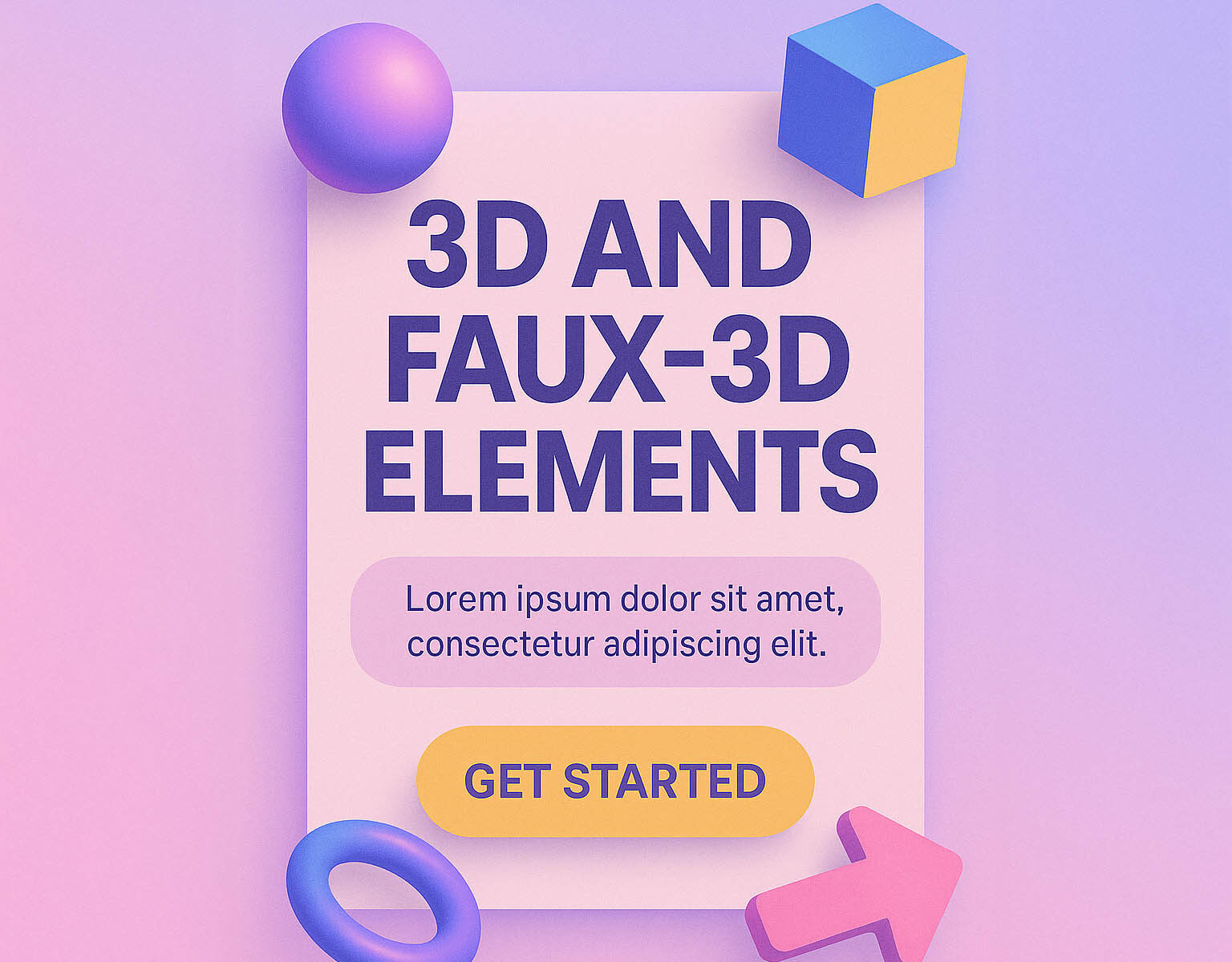
Flat design has dominated for years, but in 2025, designers are adding depth back into the digital world. 3D and faux-3D elements are making websites and graphic projects more engaging, tactile, and lifelike. Whether fully realized 3D models or clever illusions of depth, these techniques breathe fresh life into digital experiences.
Realistic 3D is now more accessible than ever, thanks to better software and browser capabilities. Designers can incorporate floating product renders, interactive virtual environments, or richly detailed illustrations without huge technical hurdles. Brands are using 3D to tell more immersive stories and showcase products in a way that feels tangible and real.
At the same time, many designers are using faux-3D — clever use of gradients, shadows, and layering — to create a sense of dimension without full modeling. This lightweight approach is perfect for faster-loading websites and mobile-first experiences. It captures the feeling of depth without the heavy resources.
The benefits of 3D design are clear: it grabs attention, enhances user engagement, and communicates quality. A beautifully rendered sneaker floating on a website, for example, makes a much stronger impression than a flat product photo. In an increasingly visual economy, brands that use 3D elements often appear more innovative and premium.
There are challenges too. Overloading a site with heavy 3D graphics can slow performance and frustrate users. Accessibility also remains a concern; designers need to ensure that users with older devices or assistive technologies can still navigate easily. Smart design balances visual richness with performance optimization.
Looking ahead, the blending of 3D and traditional design elements will become more seamless. Expect to see richer virtual showrooms, interactive demos, and even subtle 3D touches in everyday UI design. Designers who can master these techniques will have a huge advantage in creating memorable, high-impact experiences.