
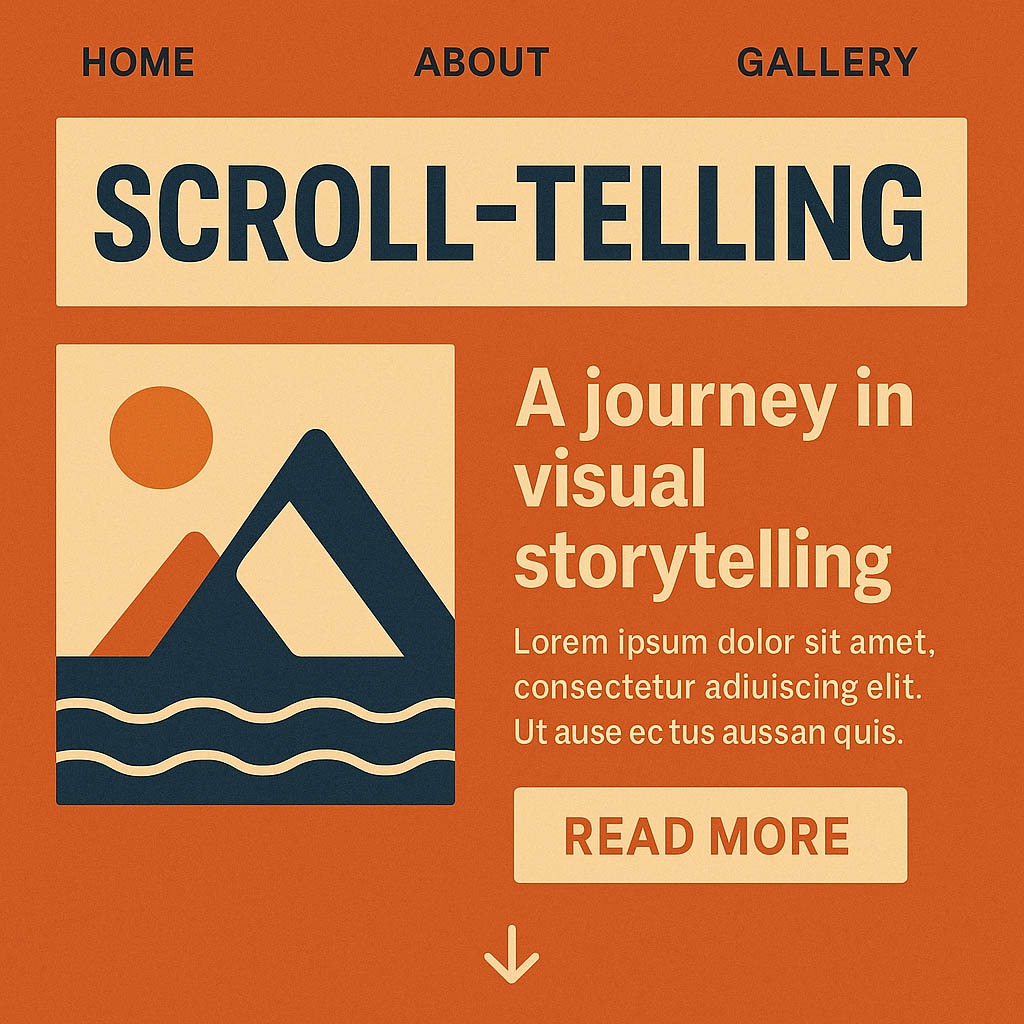
Scrolling has always been how we navigate the web, but now it’s becoming how stories are told. In 2025, scroll-telling — the practice of revealing narrative and interactive elements as users scroll — is one of the hottest trends in web design. It’s not just about displaying information anymore; it’s about unfolding an experience.
When a website is designed with scroll-telling in mind, each scroll action feels like turning a page in a beautifully crafted book. Graphics animate into view, text reveals itself piece by piece, and users are subtly guided through a journey without feeling overwhelmed. It’s a natural, engaging way to keep users’ attention in a world where attention spans are shrinking.
One of the major benefits of scroll-telling is emotional engagement. Rather than dumping all the content on a user at once, scroll-telling creates suspense, curiosity, and delight. It allows brands to control pacing, reveal key moments dramatically, and build stronger emotional connections with visitors.
Scroll-telling is especially effective for product launches, brand storytelling, nonprofit campaigns, and portfolios. Companies like Apple and Nike are masters at this technique, using it to unveil product features or brand narratives one chapter at a time. These designs feel cinematic, immersive, and highly memorable.
However, scroll-telling requires careful UX planning. If animations are too slow or if the story takes too long to unfold, users can become impatient and leave. Successful scroll-telling balances movement with speed, ensuring that users stay curious rather than frustrated.
Looking forward, as more brands invest in storytelling as a differentiator, scroll-telling will likely become a core skill for modern web designers. Those who can weave narrative, motion, and design into a seamless scroll experience will help brands captivate audiences like never before.