
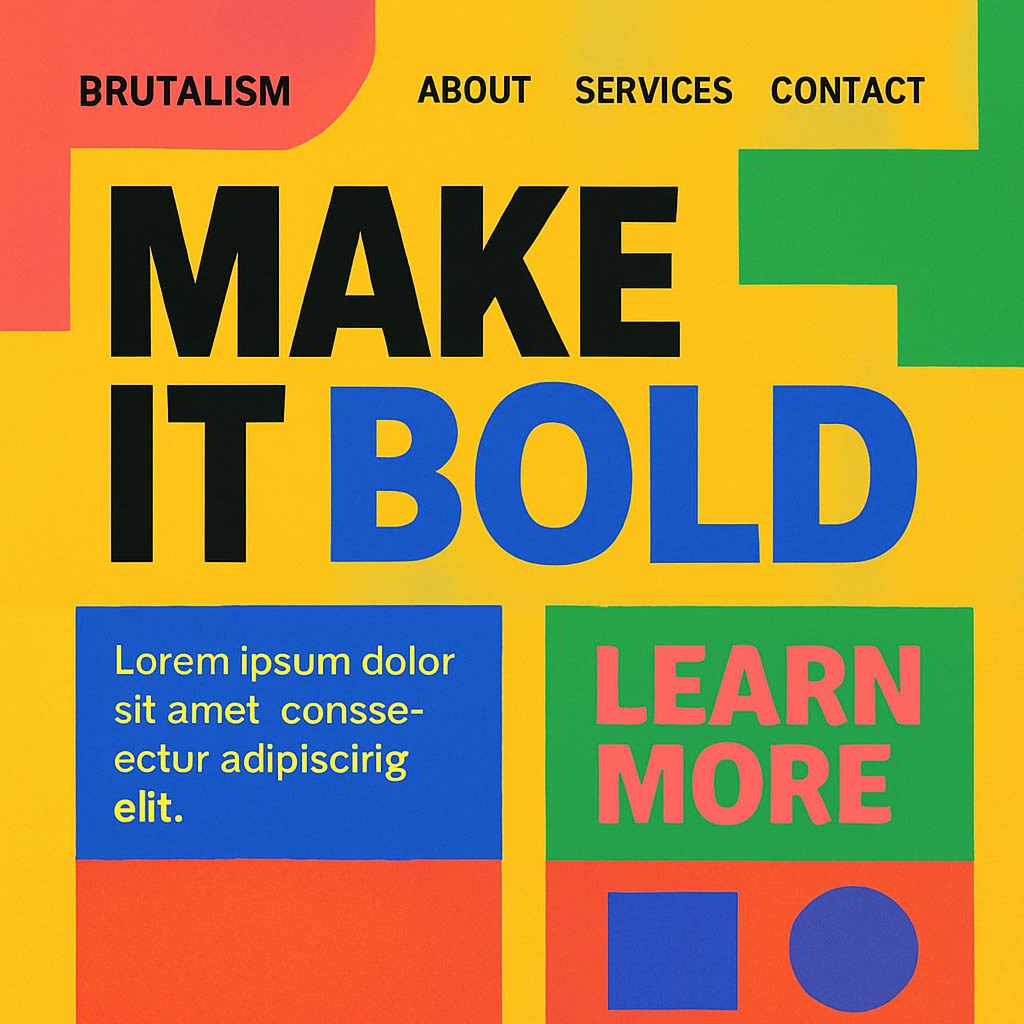
Brutalism, once seen as the “ugly duckling” of web and graphic design, is experiencing a renaissance in 2025. Originally inspired by architectural brutalism, the digital version embraced raw, unstyled layouts, harsh color clashes, and default fonts. Today’s designers are reinterpreting this style, blending its rebellious energy with modern expectations for usability and accessibility.
Modern brutalism isn’t about making things hard to use — it’s about creating memorable friction. Designers are using clashing colors, heavy blocks, and stark typography not to alienate users, but to engage them emotionally. A website that feels a little “difficult” or jarring forces users to pay closer attention, making the experience more impactful and unforgettable.
Brands that want to appear edgy, independent, or countercultural are especially drawn to brutalist design. Fashion labels, indie record companies, and creative tech startups are incorporating brutalist elements to signal boldness and authenticity. Instead of polished, “perfect” layouts, they embrace designs that look almost “unfinished” — but in a completely intentional way.
Of course, brutalism is a tricky balance. If taken too far, it can alienate users who expect smoother interactions and clearer hierarchies. Modern brutalist designers must carefully weave raw visuals with thoughtful UX practices. Strategic use of brutalism often includes clear calls-to-action, simplified navigation, and mobile responsiveness to meet today’s usability standards.
A great example of this trend is the resurgence of hyper-minimalist brutalist portfolio sites, which might feature nothing but giant type and plain hyperlinks. These sites immediately set a tone: they dare users to engage differently. The energy feels rebellious but sophisticated — a delicate line to walk.
As brutalism evolves, expect to see it appear in micro-doses across more mainstream brands, particularly in campaign-specific landing pages or experimental product launches. Designers who can master this new brutalism — raw but usable — will be able to create experiences that leave a lasting impression in a saturated market.